Current evidence lens
Interpret plurality and trace provenance
Preserve voice, cultural context, attribution, and contestable readings instead of forcing one “correct” interpretation.
Example artifact · annotated multimedia interpretationBlue-sky research agenda · conceptual demonstrator
Can agentic artificial intelligence help create multimedia open educational resources while preserving human judgment, disciplinary validity, accessibility, and public accountability?
Evidence boundary This experience demonstrates a framework and deterministic prototype. It reports no learning, reuse, accessibility, sustainability, or SDG effects.

Why should we care? · motivation
Generation speed tells us almost nothing about whether another educator may lawfully adapt, access, verify, transfer, and maintain the result.
Prediction
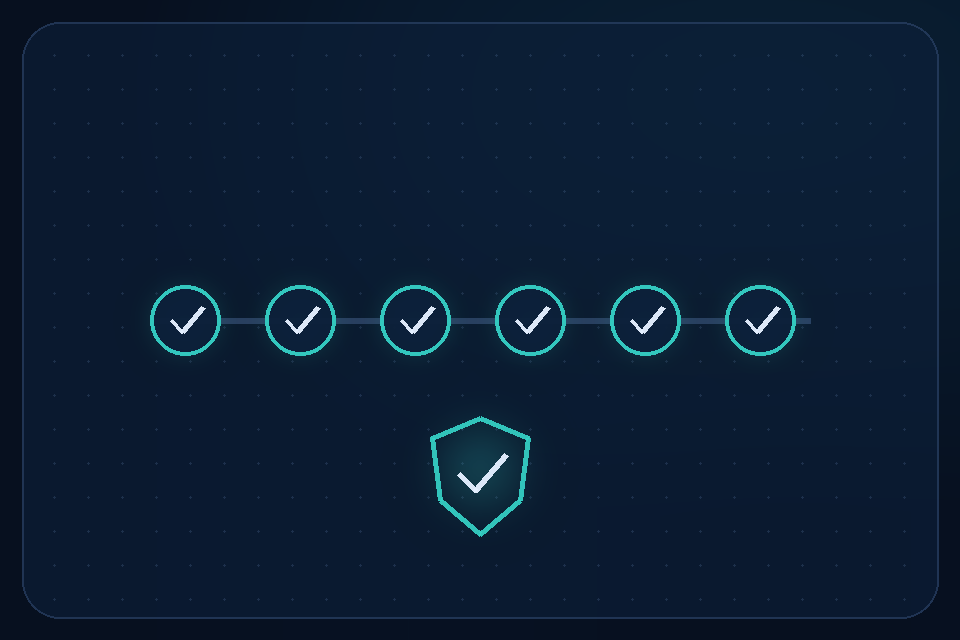
Takeaway Openness is a bundle-level, lifecycle property—not a visual style or download button.
What problem are we solving? · research question
The proposal does not flatten disciplines into a universal content factory. It defines one auditable bundle contract while keeping discipline-specific evidence norms and human release authority.

Why has this remained difficult? · background
A reusable infrastructure can standardize manifests and versions. It cannot decide what counts as a valid interpretation, construct, measurement, or safety test.
Current evidence lens
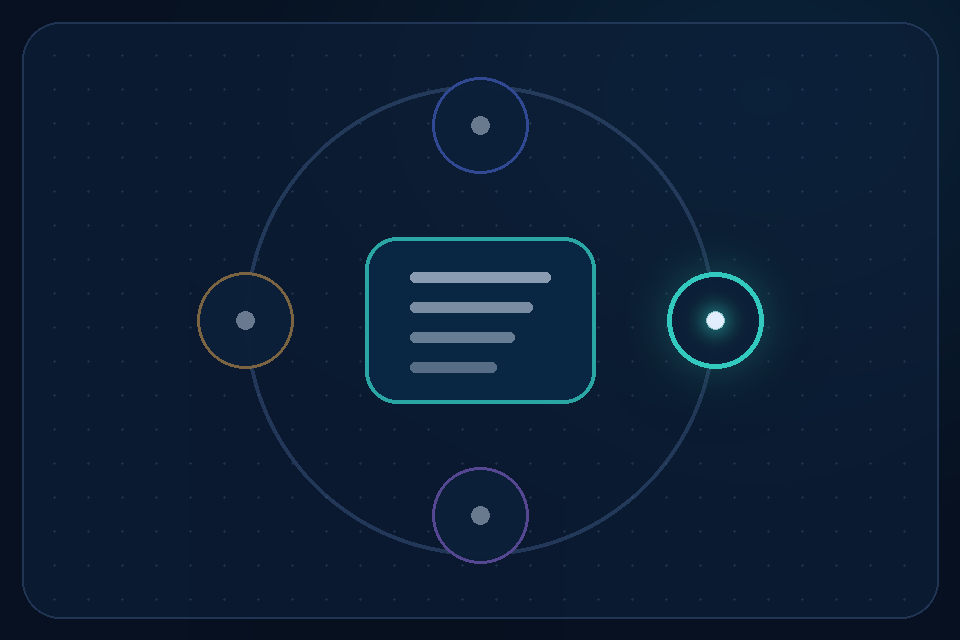
Preserve voice, cultural context, attribution, and contestable readings instead of forcing one “correct” interpretation.
Example artifact · annotated multimedia interpretationUNESCO OER defines the openness boundary; FAIR supports data stewardship; CARE foregrounds collective benefit and authority where applicable; WCAG 2.2 supplies accessibility criteria. None is a universal quality badge.
ACTIVE EVIDENCE LENS
INTERPRET voice · context · provenanceTakeaway Standardize the audit trail; pluralize the validation.
What data or method do we use? · proposed workflow
The method treats every artifact, tool action, failure, human edit, permission, and release decision as part of one versioned bundle.
Frame
Name learners, objectives, media, sources, rights, constraints, a non-agentic path, and an SDG pathway paired with a risk.
What did we discover? · evidence boundary
In a bounded, peer-reviewed comparison, adjacent systems address pieces of the problem. None of the coded rows jointly evaluates the complete multimedia OER lifecycle proposed here.
Motion explainers, a literature coding ledger, a deterministic bundle builder, static and runtime tests, and a preregisterable evaluation design.
What does this imply? · interpretation lab
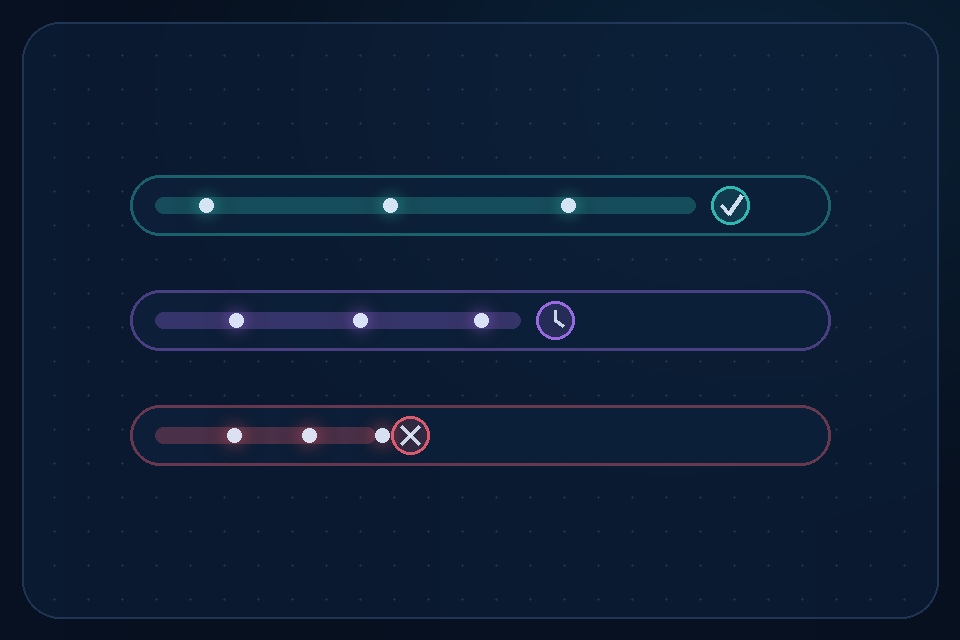
The planned study holds the brief constant across manual and agentic production. A bundle is released only when every critical gate passes.
Click each gate to simulate review. This interaction teaches the decision rule; it does not display study results.
Complete every critical review before release.
Each click cycles: unreviewed → pass → defect.
How could this change practice? · bundle lab
Choose a context. The lab generates a concise, inspectable specification—not lesson content and never an automatic release.
How narratives shape public understanding of climate transitions
until every critical gate has human evidence
What should readers think about next? · reflection
The optional reflection keeps difficulty, uncertainty, and learner judgment visible instead of making assistance the default first move.
Notice
Name the uncertainty or contested assumption before turning it into a prompt.
What have we learned? · conclusion
Valuable when reuse is lawful, accessible, portable, durable, and contestable. Unacceptable when speed substitutes for public values.
Generated fluency is not openness or learning.
One versioned bundle and traceable workflow.
Matched conditions and six fail-closed gates.
No outcome or SDG effects are yet claimed.
Carry one question forward
UNESCO OER Recommendation · Human-Centered AI · FAIR Principles · CARE Principles. Research and demonstrator by Luyao Zhang, Duke Kunshan University.
Official SDG icons: United Nations communications materials. This demonstrator is not approved by the United Nations and does not reflect the views of the United Nations, its officials, or Member States.